- componentComponent to visualize with this auxiliary kernel
C++ Type:MooseEnum
Controllable:No
Description:Component to visualize with this auxiliary kernel
- variableThe name of the variable that this object applies to
C++ Type:AuxVariableName
Unit:(no unit assumed)
Controllable:No
Description:The name of the variable that this object applies to
PointTransformationAux
Spatial point transformation used for points sent in/out of OpenMC
Description
Displays the , , or coordinates that get mapped to OpenMC. This auxiliary kernel can be used to ensure that the normal, rotation_axis, and rotation_angle parameters on SymmetryPointGenerator apply the desired transformations. In other words, this class displays the transformed spatial coordinates.
Example Input Syntax
As an example, we can visualize the transformed , , and coordinates for a mapping that obeys 1/6th symmetry with a symmetry plane normal of and a symmetry axis of with the following.
[AuxKernels<<<{"href": "../../syntax/AuxKernels/index.html"}>>>]
  [x]
    type = PointTransformationAux<<<{"description": "Spatial point transformation used for points sent in/out of OpenMC", "href": "PointTransformationAux.html"}>>>
    variable<<<{"description": "The name of the variable that this object applies to"}>>> = x
    component<<<{"description": "Component to visualize with this auxiliary kernel"}>>> = x
  []
  [y]
    type = PointTransformationAux<<<{"description": "Spatial point transformation used for points sent in/out of OpenMC", "href": "PointTransformationAux.html"}>>>
    variable<<<{"description": "The name of the variable that this object applies to"}>>> = y
    component<<<{"description": "Component to visualize with this auxiliary kernel"}>>> = y
  []
  [z]
    type = PointTransformationAux<<<{"description": "Spatial point transformation used for points sent in/out of OpenMC", "href": "PointTransformationAux.html"}>>>
    variable<<<{"description": "The name of the variable that this object applies to"}>>> = z
    component<<<{"description": "Component to visualize with this auxiliary kernel"}>>> = z
  []
[]

[Problem<<<{"href": "../../syntax/Problem/index.html"}>>>]
  type = OpenMCCellAverageProblem
  symmetry_mapper = sym
[]

[UserObjects<<<{"href": "../../syntax/UserObjects/index.html"}>>>]
  [sym]
    type = SymmetryPointGenerator<<<{"description": "Maps from a point (x, y, z) to a new point that is either mirror-symmetric or rotationally-symmetric from the point.", "href": "../userobjects/SymmetryPointGenerator.html"}>>>
    normal<<<{"description": "Normal of the symmetry plane"}>>> = '0.0 1.0 0.0'
    rotation_axis<<<{"description": "If rotationally symmetric, the axis about which to rotate. If not specified, then the geometry is mirror-symmetric."}>>> = '0.0 0.0 1.0'
    rotation_angle<<<{"description": "If rotationally symmetric, the angle (degrees) from the 'normal' plane through which to rotate to form the symmetric wedge. If not specified, then thegeometry is mirror-symmetric."}>>> = ${fparse 360.0 / 6.0}
  []
[]Then, the x variable will show the transformed coordinate - as shown in Figure 1, the coordinate obeys 1/6th symmetry.
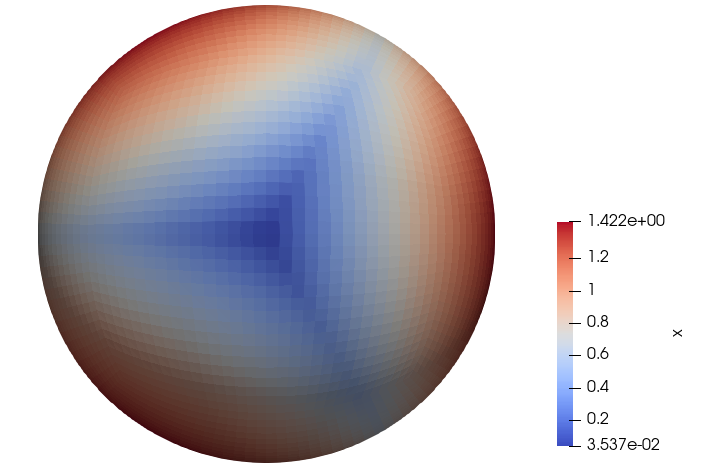
Figure 1: Example visualization of the transformed , as viewed looking down the negative axis
The OpenMC model would then need to correspond to the blue 1/6th slice in Figure 2 in order for the applied normal, rotation_axis, and rotation_angle to properly map to the OpenMC domain.
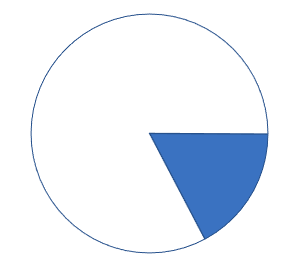
Figure 2: Intended mapping of mesh elements to 1/6th symmetry OpenMC model, the blue slice
Input Parameters
- blockThe list of blocks (ids or names) that this object will be applied
C++ Type:std::vector<SubdomainName>
Controllable:No
Description:The list of blocks (ids or names) that this object will be applied
- boundaryThe list of boundaries (ids or names) from the mesh where this object applies
C++ Type:std::vector<BoundaryName>
Controllable:No
Description:The list of boundaries (ids or names) from the mesh where this object applies
- check_boundary_restrictedTrueWhether to check for multiple element sides on the boundary in the case of a boundary restricted, element aux variable. Setting this to false will allow contribution to a single element's elemental value(s) from multiple boundary sides on the same element (example: when the restricted boundary exists on two or more sides of an element, such as at a corner of a mesh
Default:True
C++ Type:bool
Controllable:No
Description:Whether to check for multiple element sides on the boundary in the case of a boundary restricted, element aux variable. Setting this to false will allow contribution to a single element's elemental value(s) from multiple boundary sides on the same element (example: when the restricted boundary exists on two or more sides of an element, such as at a corner of a mesh
- execute_onLINEAR TIMESTEP_ENDThe list of flag(s) indicating when this object should be executed. For a description of each flag, see https://mooseframework.inl.gov/source/interfaces/SetupInterface.html.
Default:LINEAR TIMESTEP_END
C++ Type:ExecFlagEnum
Controllable:No
Description:The list of flag(s) indicating when this object should be executed. For a description of each flag, see https://mooseframework.inl.gov/source/interfaces/SetupInterface.html.
Optional Parameters
- control_tagsAdds user-defined labels for accessing object parameters via control logic.
C++ Type:std::vector<std::string>
Controllable:No
Description:Adds user-defined labels for accessing object parameters via control logic.
- enableTrueSet the enabled status of the MooseObject.
Default:True
C++ Type:bool
Controllable:Yes
Description:Set the enabled status of the MooseObject.
- search_methodnearest_node_connected_sidesChoice of search algorithm. All options begin by finding the nearest node in the primary boundary to a query point in the secondary boundary. In the default nearest_node_connected_sides algorithm, primary boundary elements are searched iff that nearest node is one of their nodes. This is fast to determine via a pregenerated node-to-elem map and is robust on conforming meshes. In the optional all_proximate_sides algorithm, primary boundary elements are searched iff they touch that nearest node, even if they are not topologically connected to it. This is more CPU-intensive but is necessary for robustness on any boundary surfaces which has disconnections (such as Flex IGA meshes) or non-conformity (such as hanging nodes in adaptively h-refined meshes).
Default:nearest_node_connected_sides
C++ Type:MooseEnum
Controllable:No
Description:Choice of search algorithm. All options begin by finding the nearest node in the primary boundary to a query point in the secondary boundary. In the default nearest_node_connected_sides algorithm, primary boundary elements are searched iff that nearest node is one of their nodes. This is fast to determine via a pregenerated node-to-elem map and is robust on conforming meshes. In the optional all_proximate_sides algorithm, primary boundary elements are searched iff they touch that nearest node, even if they are not topologically connected to it. This is more CPU-intensive but is necessary for robustness on any boundary surfaces which has disconnections (such as Flex IGA meshes) or non-conformity (such as hanging nodes in adaptively h-refined meshes).
- seed0The seed for the master random number generator
Default:0
C++ Type:unsigned int
Controllable:No
Description:The seed for the master random number generator
- use_displaced_meshFalseWhether or not this object should use the displaced mesh for computation. Note that in the case this is true but no displacements are provided in the Mesh block the undisplaced mesh will still be used.
Default:False
C++ Type:bool
Controllable:No
Description:Whether or not this object should use the displaced mesh for computation. Note that in the case this is true but no displacements are provided in the Mesh block the undisplaced mesh will still be used.
Advanced Parameters
- prop_getter_suffixAn optional suffix parameter that can be appended to any attempt to retrieve/get material properties. The suffix will be prepended with a '_' character.
C++ Type:MaterialPropertyName
Unit:(no unit assumed)
Controllable:No
Description:An optional suffix parameter that can be appended to any attempt to retrieve/get material properties. The suffix will be prepended with a '_' character.
- use_interpolated_stateFalseFor the old and older state use projected material properties interpolated at the quadrature points. To set up projection use the ProjectedStatefulMaterialStorageAction.
Default:False
C++ Type:bool
Controllable:No
Description:For the old and older state use projected material properties interpolated at the quadrature points. To set up projection use the ProjectedStatefulMaterialStorageAction.